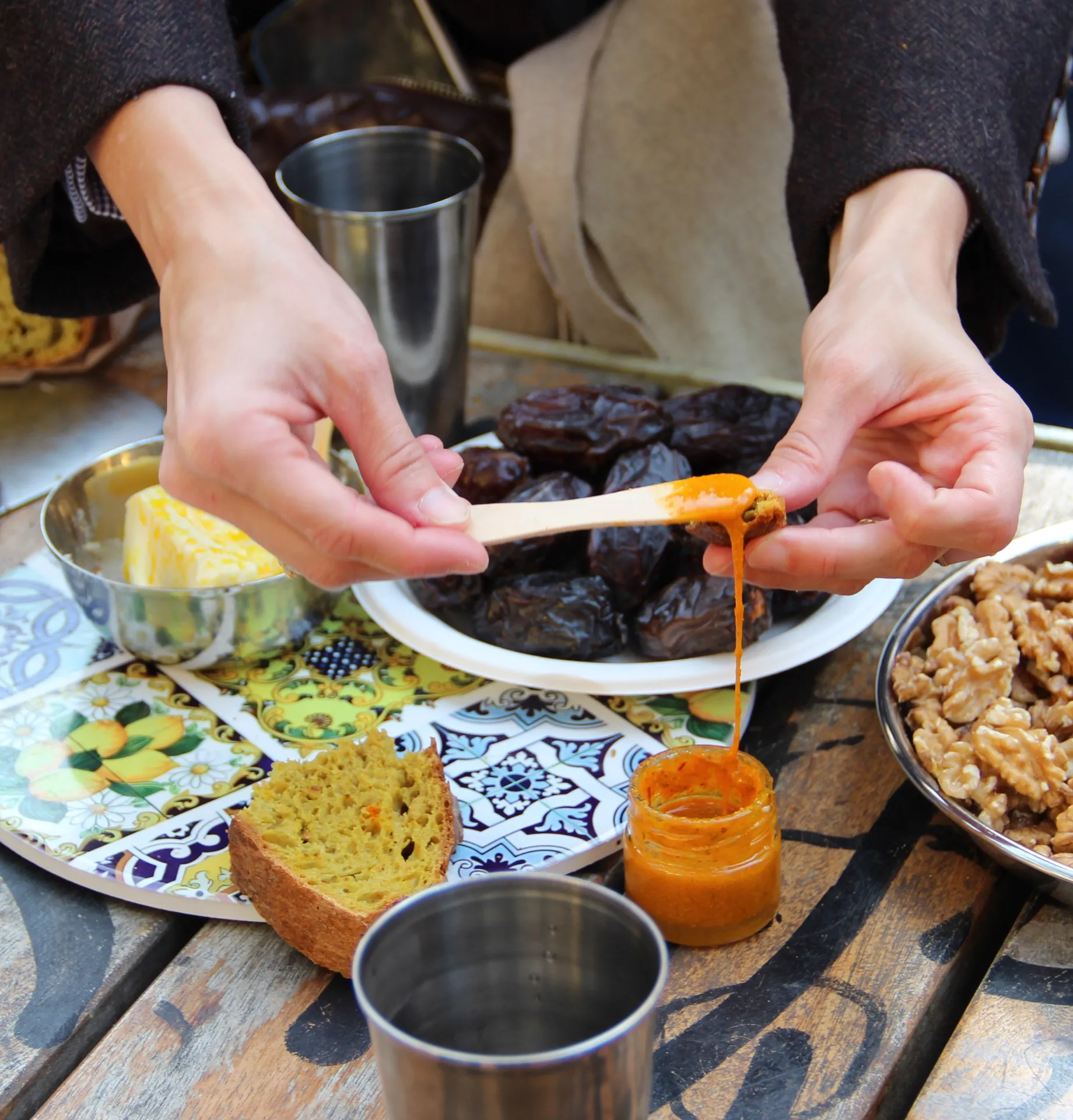
What does Ayurveda try to understand?
Ayurveda looks for patterns across appetite, digestion, sleep, energy, stress, movement, climate, life stage and daily routine. Traditional concepts such as vata, pitta and kapha—the doshas—help practitioners organize those observations. A responsible practitioner does not present a dosha assessment as a blood test or a diagnosis of disease.
What happens in a VEDICA consultation?
The first meeting maps the concern and its context: symptoms, medical history, current treatment, medication and supplements, recent blood tests, clinical diagnoses, meals, bowel patterns, sleep, stress and practical constraints. The second meeting explains an individualized complementary plan. It may include food, infusions, routine and lifestyle guidance; herbs are considered only in relation to that clinical context.
Why the answer is never one generic routine
“Better digestion,” “balanced hormones” and “less stress” can describe very different situations. The plan changes with the type of symptom, its timing, medical findings, medication, life stage and what the person can realistically sustain. General education can suggest questions; a clinic meeting is needed for individualized advice.
What does the evidence say?
The US National Center for Complementary and Integrative Health notes that relatively few well-designed clinical trials have evaluated Ayurvedic approaches and that evidence is limited for many health issues. This means each intervention should be judged separately; the age or popularity of a tradition is not proof that it treats a condition.
The World Health Organization describes traditional medicine as a broad field and is developing terminology and standards to support clearer communication. Standardization is useful, but it does not turn every traditional claim into established clinical evidence.
Clinical context before a plan
- Bring current medication, supplements, recent blood tests and clinical diagnoses to the conversation.
- Share pregnancy, fertility treatment, medical follow-up and product use before herbs or supplements are considered.
- Product quality matters; some Ayurvedic preparations have been found to contain harmful metals.
- Seek licensed medical care for severe, new, persistent or worsening symptoms.
Ayurveda and conventional medicine
This is not a choice between two complete systems. Western medicine is essential for diagnosis, emergencies and evidence-based treatment. Ayurveda at VEDICA may add structured attention to food, routine, sleep, stress and adherence when it is coordinated with medications, blood tests, diagnoses and medical follow-up.
Frequently asked questions
What does Ayurvedic mean?
Ayurvedic means related to Ayurveda, a traditional Indian medical system. An Ayurvedic approach may use individualized ideas about diet, daily routine, exercise and sometimes herbs or other products; the word does not by itself show that a claim is scientifically proven or medically appropriate.
What is Ayurvedic medicine?
Ayurveda is a traditional Indian medical system that uses diet, lifestyle, exercise, and sometimes plant, mineral or other products within an individualized framework. At VEDICA it is used beside Western medical information, current medications, diagnoses and recent blood tests when relevant.
What happens in an Ayurvedic consultation?
A consultation explores the main concern, medical history, medication, recent blood tests, clinical diagnoses, appetite, digestion, sleep, stress, energy and routine. At VEDICA the first meeting gathers the pattern and the second presents an individualized complementary plan.
Is Ayurveda scientifically proven?
Evidence depends on the specific intervention and condition. Some practices have been studied, but high-quality evidence is limited for many Ayurvedic approaches, so broad claims that Ayurveda cures disease are not justified.
How does Ayurveda work alongside Western medicine?
The VEDICA process is built beside Western medicine. Current medications, recent blood tests, clinical diagnoses and medical follow-up are reviewed before nutrition, infusions or herbs are suggested.
How does Ayurveda fit with conventional medicine?
Ayurveda at VEDICA is coordinated with prescribed medication, surgery, fertility treatment, mental-health care or medically indicated follow-up when those are part of the person's clinical picture.
What are doshas in Ayurveda?
Doshas are traditional Ayurvedic pattern concepts called vata, pitta and kapha. They can help organize observations about digestion, sleep, energy, heat, dryness and routine, but they are not modern medical diagnoses.
What is Ayurvedic medicine used for?
People often seek Ayurvedic support for digestion, food habits, stress, sleep, daily routine and complementary wellness guidance. Any medical symptom still requires appropriate medical assessment and care.